The debate surrounding the EU’s AI Act often centers on the potential for regulatory burdens to stifle innovation. However, groundbreaking solutions developed within Europe demonstrate that these regulations are not an impediment but a framework for creating superior, trustworthy products. The AIcheq assessment tool, developed by Eximiatutor, stands as a prime example of this principle.
In partnership with an University of Applied Sciences Laurea sector client, we have created comprehensive documentation covering GDPR, DPIA, and FRIA requirements. These documents, which are publicly available (searching words eximiatutor or aicheq) in the Ilona IT AI and GDPR database, provide a transparent blueprint for compliance https://www.ilonait.fi/gdpr-library. This proactive approach shows that the necessary regulatory groundwork can be completed efficiently, providing a clear path for other organizations to follow.
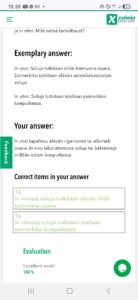
The core value proposition of AIcheq is its ability to dramatically enhance efficiency without compromising quality. Our results show that the time dedicated to assessment can be reduced by 30-88%, a significant saving for educational institutions. This time can be redirected toward more impactful pedagogical work, such as providing personalized feedback or developing curriculum.
This efficiency is not achieved by sacrificing human control. As stipulated by the EU’s AI Act, the human role remains central. In the AIcheq workflow, a teacher or subject matter expert is in full command. The teacher defines the criteria, questions, and model answers before the assessment begins, a process that requires a focused and deliberate approach to instructional design. By setting these parameters in advance, the assessment process is made as objective as possible. The AI functions as a powerful tool that uses these predefined criteria to provide an initial, data-driven evaluation. The final scoring and any modifications remain at the teacher’s discretion, ensuring that the human-in-the-loop principle is fully maintained.
This symbiotic relationship between human expertise and AI efficiency not only meets regulatory demands but also represents a new standard for quality in educational assessment. It illustrates that when designed thoughtfully, AI can be a powerful ally for teachers, providing them with the means to save time while ensuring assessments are fair, transparent, and consistent.